
Old Filling Giving You Trouble? When We Recommend Repair or Replacement
Old Filling Giving You Trouble? When We Recommend Repair or Replacement
Table of Contents
Key Takeaways
An old filling does not need replacing just because it has been there for many years. Its condition and how well it is still protecting the tooth matter more than age alone.
New sensitivity, discomfort when chewing, roughness or repeated food trapping can be signs that the restoration or surrounding tooth needs to be assessed.
Minor damage may sometimes be repaired, while more extensive deterioration can require the restoration to be removed and replaced.
Early assessment may provide more options for managing a deteriorating restoration while preserving as much healthy tooth structure as possible.
Introduction
A filling can do its job for years without drawing any attention. Then, seemingly out of nowhere, the tooth starts feeling different. A cold drink causes a sharp twinge. Food keeps getting stuck around the same spot. You notice a rough edge with your tongue, or chewing on that side suddenly feels uncomfortable.
When this happens, many patients assume the filling has simply become too old. But replacing an old filling is not usually a decision we make based on age alone.
What matters more is whether the filling is still sealed properly, whether the surrounding tooth remains strong, and whether there are signs of decay or damage underneath. Some older fillings continue to function well for many years, while others may need attention sooner because of wear, fracture, grinding or changes in the surrounding tooth structure.
That is why we look at more than just the restoration itself. We assess how the filling and tooth work together, and whether anything has changed enough to justify repair or replacement.
When Does an Old Filling Actually Need Attention?
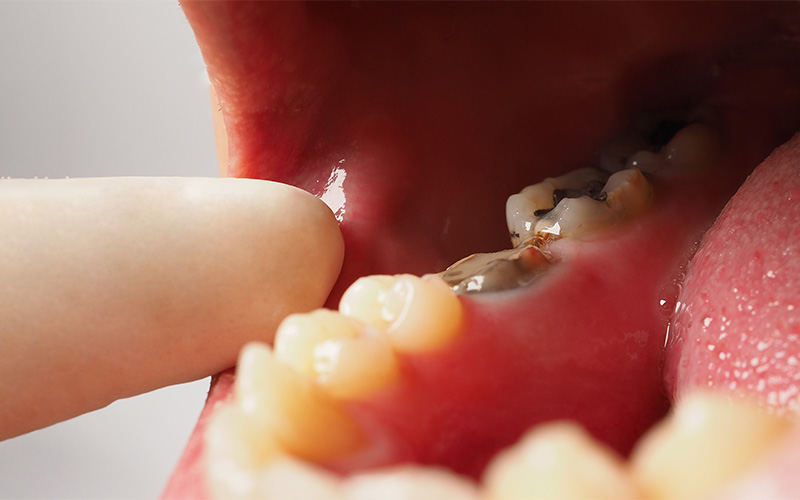
An old filling needs attention when it no longer seals or supports the tooth properly. Sometimes the warning signs are obvious. A piece of the restoration may break away, leaving a rough or sharp edge. A loose filling may shift slightly when you bite, while a cracked filling may leave a visible line or missing section.
In other cases, the signs are much subtler. For example, repeated food trapping beside the same back tooth may seem like a minor irritation, but it can sometimes indicate a change around an existing filling. The edge may have worn down, part of the surrounding tooth may have fractured, or a small gap may have developed where the restoration meets the enamel.
That is why we also pay attention to persistent sensitivity, discomfort when chewing, darkening around the filling, or a change in how the tooth feels when you bite. Discolouration around a filling does not necessarily mean there is decay underneath, as some restorations can develop marginal staining over time. The area needs to be examined in context with the condition of the restoration and surrounding tooth.
Why Can an Old Filling Suddenly Start Hurting?
It can be frustrating when a tooth that has felt fine for years suddenly becomes sensitive or uncomfortable. Often, the change has been developing gradually rather than happening overnight.
Both the filling and the surrounding tooth are exposed to repeated chewing forces every day. Larger restorations in back teeth tend to carry more pressure, and grinding or clenching can add even more strain over time.
As the years pass, small changes may develop around the edges of the filling. Changes or defects around the margins of a restoration can sometimes make the area more difficult to keep clean, and decay may develop around or beneath an existing filling.
We also pay attention to the type of discomfort. For example, a tooth that hurts only when you bite something firm may suggest the issue isn’t limited to the filling itself. A weakened cusp may be flexing, or a crack may have developed in the surrounding tooth structure.
That is why we do not assume pain automatically means the filling needs to be replaced. The key is to identify what’s causing the symptom before deciding on the next step.
Does Every Old Filling Eventually Need Replacing?
We do not treat fillings as though they come with a fixed expiry date. It is common for patients to become concerned when they realise a filling has been in place for ten or fifteen years. Age is useful information, but it does not tell us whether the restoration needs to be replaced.
So, how long can a filling actually last? You may come across average lifespan estimates for different filling materials, but these are only general guides rather than replacement deadlines. How long an individual restoration lasts depends on factors such as its size and location, the material used, chewing forces, grinding habits, oral hygiene and the condition of the surrounding tooth.
Two fillings that are the same age can be in very different condition. One may be small, comfortable and still well sealed, with plenty of healthy tooth surrounding it. Another may cover much of a back tooth and show signs of wear, grinding-related stress or decay developing around one edge.
The number of years may be the same, but the treatment decision can be very different.
This is one reason a routine dental checkup is useful when you have older or larger restorations. It lets us monitor changes over time instead of replacing a filling simply because it has been there a long time.
If the restoration remains stable and continues to protect the tooth properly, leaving it alone may help preserve more of the natural tooth.
How Do Dentists Check an Old Filling?
Assessing an old filling involves more than looking at how many years it has been in place. We start with what you have noticed, such as new sensitivity, pain when biting, food trapping, roughness or a change in how the tooth feels. That history can give us useful clues about whether the issue is coming from the filling itself, the surrounding tooth or the way the tooth is meeting its opposite tooth when you bite.
During the examination, we look closely at the restoration and the tooth around it. This includes checking the filling margins for wear or gaps, looking for cracks or fractures and assessing whether food is getting trapped because the contact between neighbouring teeth has changed. We also check the surrounding tooth structure, the gums around the area and the bite to see whether the tooth is taking unusual pressure.
Where appropriate, we may carry out sensitivity or pulp tests to assess how the tooth is responding. Dental X-rays may also be recommended, particularly when we need to look for decay between teeth or beneath areas of a restoration that cannot be examined directly. If previous X-rays are available, comparing them can also help us see whether there have been changes over time.
These findings help us decide whether the filling can continue to be monitored, whether a localised defect may be repaired, or whether replacement or another form of treatment is more appropriate.
When Would We Repair a Filling Instead?
What We Find | What It May Mean | Possible Approach |
|---|---|---|
Filling is stable, well sealed and symptom-free | The restoration is still functioning adequately | Continue monitoring during routine dental visits |
Small chip or localised wear, with no decay underneath | The damage is limited and the rest of the filling remains sound | Repair the affected area where appropriate |
Filling is loose, fractured or no longer sealing properly | The restoration may no longer be protecting the tooth effectively | Remove and replace the filling |
Decay is present beneath or around the restoration | The affected tooth structure needs to be treated before restoring the tooth | Filling replacement may be needed after removing the decay |
A large amount of tooth structure has been lost or weakened | Another filling may not provide enough support | An inlay, onlay or dental crown may be considered |
Decay or damage has extended towards the pulp | The problem may involve the nerve and blood supply inside the tooth | Further assessment may be needed before the tooth is restored |
The appropriate approach depends on the individual tooth and cannot be determined from the age or appearance of a filling alone.
Not every damaged dental filling needs a complete replacement. If a filling has only a small localised defect, repair may sometimes be possible if the rest of the restoration remains stable.
The decision changes when several problems are present at the same time. A filling that has started to move, fractured along one side and developed decay beneath the margin is unlikely to be helped by simply patching the visible defect. In that situation, a full replacement may be more appropriate.
This distinction matters because removing an entire restoration can also mean removing a small amount of additional tooth structure. Where possible, we prefer to keep sound tooth intact rather than replace more than is necessary.
The aim is not to preserve an old filling at all costs, but to choose the least extensive treatment that still addresses the underlying problem.
What Can We Find Beneath an Old Filling?
Clinical examination and dental X-rays can often provide useful information beforehand, although they cannot always show the full extent of what lies beneath or around a restoration.
Sometimes the true condition of a tooth only becomes clear once the old filling has been removed.
In some cases, we find only a small area of decay underneath. After managing the decay, enough healthy tooth structure may remain for the tooth to be restored with another filling.
In other cases, the picture is more complex. A large restoration can sometimes hide thin or weakened cusps, leaving too little sound tooth for another large filling to provide adequate support. When that happens, we may discuss an inlay, onlay or dental crown, depending on factors such as how much healthy tooth remains, where the tooth has been weakened and the forces it needs to withstand.
There are also situations where decay has progressed deeper towards the pulp, which contains the tooth’s nerves and blood vessels. If the pulp has become significantly inflamed or infected, replacing the filling alone may not be enough. Root canal treatment may then need to be considered before the tooth can be restored.
This is why we avoid making assumptions based only on how an old filling looks from the surface. The final treatment depends as much on what we find underneath and how much healthy tooth we can still preserve.
What Happens If You Leave a Failing Filling Alone?
The problem with a failing filling is not simply that it is old. Once the seal around it starts to break down, bacteria can reach areas that are difficult to clean properly at home.
Decay may then develop beneath the restoration while the surface still looks relatively normal. Over time, this can leave less healthy tooth structure available to restore.
Depending on the cause, deterioration around a restoration may progress over time and leave less healthy tooth structure available for repair. If more tooth structure becomes weakened or lost, may need a larger restoration. If decay or inflammation extends towards the pulp, additional treatment may also become necessary.
For that reason, it is worth having the tooth checked if you notice repeated food trapping, new sensitivity, roughness, movement or pain when chewing. Waiting for the filling to fall out can mean waiting until the tooth has already lost more structure.
So, Should Your Old Filling Be Replaced?
There is no fixed age at which a filling automatically needs replacing. What matters is whether it is still sealed properly, whether the surrounding tooth remains strong, and whether there are signs of decay, cracking, or changes in how the tooth feels when you bite.
At Canaan Dental Surgery, we assess the tooth as a whole before recommending replacing an old filling. Sometimes a small repair is enough. In other cases, a full replacement may be more appropriate, and a tooth that has lost a substantial amount of structure may need a larger restoration, such as a dental crown. Our focus is on preserving as much healthy tooth as possible while addressing the underlying problem.
If an old filling has started to feel loose, rough, sensitive or painful when you chew, or food keeps getting caught around the same tooth, contact us to arrange a dental examination. We can assess what has changed and advise whether monitoring, repair or replacement is the most suitable next step.
FAQs About Repairing and Replacing Dental Fillings
Can decay develop underneath an old filling?
Yes. Decay can sometimes develop around the margins of an existing filling and extend beneath parts of the restoration. It may not always be visible or painful in the early stages. During an examination, your dentist assesses the filling and surrounding tooth and may recommend dental X-rays where appropriate to look for changes that cannot be seen directly.
Can an old filling be repaired instead of replaced?
Sometimes. If a defect is localised and the rest of the restoration and surrounding tooth remain in suitable condition, repairing part of the filling may be an option. More extensive damage, recurrent decay or an unstable restoration may make complete replacement more appropriate. The decision depends on the condition of the individual tooth and restoration rather than the age of the filling alone.
How do dentists know if a tooth needs a root canal or extraction?
Depending on the situation, your dentist may use pulp sensibility tests, bite or percussion tests, periodontal examination and dental X-rays.
Root canal treatment may be considered when the pulp is irreversibly inflamed or infected and the tooth remains restorable. Extraction may be considered when the tooth has a poor overall prognosis because of factors such as insufficient remaining structure, an unfavourable fracture, severe loss of support or another problem that cannot be predictably managed.
Can a filling be replaced more than once?
Yes. A filling can sometimes be replaced more than once if there is enough healthy tooth structure remaining to support another restoration. However, replacing a filling may require some additional tooth structure to be removed, particularly if there is decay or damaged tooth around the existing restoration. If a large amount of tooth structure has been lost or weakened, your dentist may consider another type of restoration, such as an inlay, onlay or crown, depending on the individual tooth.
Can a damaged filling be urgent?
A damaged filling is not always a dental emergency, but you should not ignore it. If the filling has fallen out completely, causes severe pain, leaves sharp edges that injure your tongue or cheek, or is associated with significant swelling, you should arrange prompt dental care. Even if there is little discomfort, an examination is recommended so the condition of the filling and underlying tooth can be assessed before deciding whether repair or replacement is needed.
How long do dental fillings last?
There is no fixed expiry date for a dental filling. How long a restoration remains functional depends on factors such as its size and location, the material used, chewing forces, grinding or clenching, oral hygiene and the condition of the surrounding tooth. Rather than replacing a filling simply because it has reached a certain age, dentists assess its current condition and whether it is still functioning adequately.

