
Why a Tooth Can Feel Hollow: The Causes We See Most
Why a Tooth Can Feel Hollow: The Causes We See Most
Table of Contents
Key Takeaways
A tooth that feels hollow or different may have several possible explanations, including decay, a crack, changes around an existing restoration or altered pressure when biting. The sensation alone cannot identify the cause.
The absence of pain does not rule out a dental problem, as some forms of decay and structural damage can progress with few noticeable symptoms.
Assessment can help determine whether the tooth simply needs monitoring or whether dental treatment is appropriate, and if so, what approach best preserves healthy tooth structure.
Earlier assessment can help clarify whether the tooth can be repaired conservatively or requires a more extensive restorative approach.
Introduction
It can be surprisingly hard to explain when one tooth just feels different. You might notice a hollow or empty sensation when you chew, a slightly odd feeling when your teeth come together, or simply that the tooth no longer feels as solid as the ones around it. Sometimes there is sensitivity or a brief sharp pain. Other times, there is no pain at all.
Hollow is not a specific dental diagnosis, and different people may use the word to describe different sensations. For some, it means the tooth feels unusual under pressure; for others, it may refer to sensitivity, a change around an existing filling or simply a difference in how the tooth contacts during chewing. The examination therefore focuses on what the tooth is actually doing rather than the description alone.
If one tooth begins to feel noticeably different from the others, the timing of the change and any accompanying symptoms can provide useful clues.
Can Tooth Decay Cause a Tooth to Feel Hollow?
Tooth decay is one possible explanation, particularly if there are other symptoms such as sensitivity to sweets or cold, food trapping or discomfort when chewing.
Decay usually starts in the enamel before spreading into the softer dentine underneath. Once it reaches this layer, the damage can extend further inside the tooth even when the opening on the surface still looks quite small. As a result, the tooth may appear relatively normal from the outside while more of its internal structure has already been weakened.
For example, a back tooth may feel unusual during chewing even when there is no obvious cavity visible at home. Dental X-rays can sometimes show decay that is not apparent during visual examination, particularly between teeth or around some existing restorations.
Other symptoms of tooth decay can include sensitivity to hot, cold or sweet foods, discomfort when biting, visible dark spots or a persistent ache. However, some cavities cause very few noticeable symptoms in their earlier stages.
This is why we do not judge the condition of a tooth based on pain or appearance alone. Management depends on the extent and activity of the decay, whether tooth structure has already been lost, and the condition of the remaining tooth. Where restoration is required, a filling may be appropriate in some cases, while more extensive structural loss may require a different restorative approach.
Cracks and Fractures Can Change How a Tooth Feels
With a cracked tooth, you may only notice something feels wrong when you bite or chew on a particular part of it. Some patients tell us that the tooth feels normal most of the time, but becomes uncomfortable when they bite on something firm or when pressure falls on one side.
These details can be useful because a cracked section of tooth may flex slightly under pressure. That can lead to brief, sharp pain, an odd sensation when chewing, or discomfort that comes and goes depending on how the tooth is loaded.
Cracks can develop after an injury, repeated chewing forces or teeth grinding. Teeth with large existing fillings may also be more vulnerable because there is less natural tooth structure left to absorb biting pressure.
The difficulty is that many cracks are not easy to see. A fine fracture may be difficult to spot in the mirror and can sometimes be missed during a simple visual check. We may assess individual cusps, check how the tooth responds to controlled biting pressure and use additional examination techniques where needed to look for signs of a fracture.
Fine cracks may not be visible on conventional dental X-rays, so dentists often rely on the symptom pattern together with clinical techniques such as bite testing, magnification and transillumination.
If the crack has weakened a significant part of the tooth but the tooth can still be restored, a dental crown may be considered. Treatment depends on the location and extent of the crack, the condition of the pulp and how much sound tooth structure remains. Restorative options may include a crown or another form of cuspal coverage in selected cases.
Previous Dental Work May No Longer Be Supporting the Tooth Properly
When the affected tooth already has a filling, crown or another restoration, we also check whether that dental work is still protecting and supporting the tooth as intended.
Over time, restorations are exposed to repeated chewing forces, temperature changes and everyday wear. A filling may become worn, fracture or develop a small gap along its edge, while decay can sometimes form around or beneath an older restoration. These changes may affect how the tooth feels even when the restoration still looks intact from the outside.
One situation we may see is a molar with a large filling that has been comfortable for years but starts to feel different during chewing. The filling may appear unchanged, yet the tooth underneath may have weakened, or changes where the restoration meets the tooth.
In these cases, we look beyond the surface of the restoration. We assess the filling or crown margins, the surrounding enamel, how the tooth meets the opposing teeth and how much healthy structure remains underneath. This helps determine whether the restoration can continue to be monitored, whether a localised problem may be repaired, or whether replacement or another form of treatment is appropriate.
Changes Inside the Tooth Can Also Affect How It Feels
Sometimes, the cause lies deeper within the tooth rather than on the outer surface. Deep decay, cracks or previous trauma can affect the dental pulp, which contains the nerves and blood vessels inside the tooth.
If the unusual sensation is accompanied by temperature sensitivity, spontaneous pain, lingering discomfort or tenderness when biting, we may also assess the health of the pulp and tissues around the root.
If testing shows significant pulpal inflammation or infection, root canal treatment of the pulp may be required. Cold or other sensibility tests, clinical findings and dental X-rays can help determine whether the pulp is involved. may be recommended.
A change in symptoms does not by itself tell us the condition of the pulp, so persistent or recurring concerns need to be interpreted alongside clinical tests.
Because it may cause few noticeable symptoms at first, diagnostic imaging can be particularly helpful when the clinical examination does not fully explain what the patient is feeling.
Should You Be Concerned If the Tooth Does Not Hurt?
We would still recommend having a tooth examined if it suddenly feels noticeably different, even when there is no pain. A change in how the tooth feels does not necessarily indicate a serious problem, but a persistent change can be worth assessing, particularly if other symptoms develop.
You may notice that the tooth feels less solid, catches differently when you chew, or simply feels unusual when your teeth come together. These changes are worth assessing, particularly if they persist or become more noticeable over time.
An earlier examination can also help determine how much healthy tooth structure remains. In some cases, this may allow for a more conservative repair. If decay or a fracture progresses further, the tooth can become more difficult to restore and may require more involved treatment.
Tooth replacement options may include a bridge, denture or dental implant. The most suitable option will depend on factors such as the condition of the neighbouring teeth, gum health and the amount of supporting bone available.
More prompt dental attention is recommended if the unusual sensation is accompanied by severe or worsening pain, swelling, fever, pus or a persistent bad taste in the mouth. Rapidly increasing facial or neck swelling, or difficulty swallowing or breathing, requires urgent medical assessment.
How Do We Find Out What Is Causing the Sensation?
When a patient describes a tooth as feeling “hollow”, the next step is to work out what is actually causing that change.
We usually start by asking when the sensation appears. Does it happen when biting down, when releasing the bite, with hard foods or with hot and cold drinks? We also consider whether the tooth has been filled or crowned before, whether there has been any recent trauma, and whether grinding or clenching could be contributing.
The examination may include checking the tooth and surrounding gums, looking closely at any existing restorations and assessing how the tooth responds to biting pressure where relevant. Pulp sensibility tests can also help us understand how the tissues inside the tooth are responding.
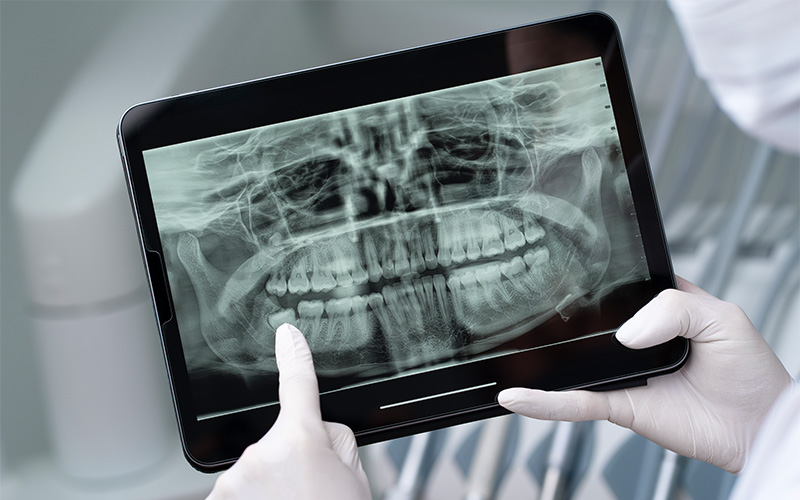
Dental X-rays may be needed to look for decay that is not visible from the surface, changes beneath a filling or crown, or problems around the root. If we suspect a fine crack, transillumination may also be useful. This involves shining a specialised light through the tooth to help reveal interruptions in the tooth structure. It can provide additional clues but does not determine the depth or significance of a crack on its own.
Two patients can describe the same “hollow” feeling but have very different underlying problems. That is why we base the diagnosis and treatment plan on the examination findings rather than the sensation alone. “Hollow” describes a sensation rather than a diagnosis. These patterns provide clues, but an examination is needed to determine whether there is actually a problem with the tooth.
When a Tooth Feels Different, It Is Worth Finding Out Why
A hollow sensation does not necessarily mean that a tooth is badly damaged, but it can be an early sign that something has changed. Decay, a fine fracture, deterioration around an older restoration, or changes affecting the dental pulp can all alter how a tooth feels before more obvious symptoms develop.
Hollow describes a sensation rather than a diagnosis. These patterns provide clues, but an examination is needed to determine whether there is actually a problem with the tooth.
Canaan Dental Surgery has provided personalised general and restorative dental care in Siglap since 1996.
If one of your teeth has started to feel hollow, less solid or simply different when you bite or chew, contact Canaan Dental Surgery to arrange an examination and find out what may be causing the change.
FAQs About a Tooth That Feels Hollow
Can a filling fix a tooth that feels hollow?
It depends on what is causing the sensation and how much healthy tooth structure remains. If there is a localised area of tooth damage that requires restoration, a filling may be appropriate in some cases. Larger structural defects, cracks or significant pulpal involvement may require a different approach. The sensation of ‘hollowness’ alone cannot determine which treatment is needed.
Why does my tooth feel hollow only when I bite down?
A sensation that appears only during biting may be related to how pressure is being transmitted through the tooth. Dentists may consider possibilities such as a crack, weakened tooth structure, an existing restoration or inflammation around the tooth. If the sensation occurs consistently in one area or is accompanied by pain on biting or releasing pressure, clinical testing can help identify the cause.
Can a tooth feel hollow after a filling or root canal treatment?
A tooth can feel different after dental treatment because its shape, contact with neighbouring or opposing teeth, or response to biting may have changed. If the sensation is new, persistent or develops long after treatment, the tooth and restoration should be assessed to check for issues such as wear, fracture, changes around the restoration or another dental problem. A tooth that has had root canal treatment does not respond to temperature in the same way as a tooth with a vital pulp, but the tooth and surrounding tissues can still develop other sources of discomfort.
Can a tooth feel hollow even if nothing is wrong?
Yes. “Hollow” is a subjective description rather than a specific dental diagnosis, and an unusual sensation does not necessarily mean the tooth is seriously damaged. Sometimes the tooth or bite simply feels different without a significant structural problem being found. If the sensation persists, changes or is accompanied by pain, sensitivity or difficulty chewing, an examination can help determine whether anything requires treatment.
Can an X-ray show why my tooth feels hollow?
Dental X-rays can provide useful information about decay, existing restorations, the supporting bone and some changes around the tooth roots. However, they do not show every dental problem, and fine cracks in particular may not be visible on conventional X-rays. Dentists therefore interpret X-rays together with the examination, your symptoms and other clinical tests.

